Yuccies stands for “Young Urban Creatives”. They are thought to be as comfortable with money as with information and communication technology, with many of today’s Yuccies also being digital natives. The urban setting allows them to network with other like-minded, in addition to their numerous internet “friends” on the social media services of the day. Many of the Yuccies have a background in a professional job that required a university degree. Feeling liberated to do something more intrinsically fulfilling, they moved to creative industries such as graphic design or photography. The term Yuccies is attributed to David Infante of Mashable1.
Where are all the Yuccies?
Like the name suggests, Yuccies are found in urban settings. Most likely in cities that have a creative profile. Empowered by technology, they are mobile and may not only be found designing a new baseball cap in their neighborhood coffee shop. They could be digital nomads doing big city hopping. Where one month in Stockholm is followed by one in London, with an occasional refreshing beach in Thailand. The most likely places to find Yuccies are in the world’s most creative countries2, see top 10 list.
Top 10 Yuccie Countries 2015:
Australia
United States
New Zealand
Canada
Denmark
Finland
Sweden
Iceland
Singapore
The Netherlands
Narrowing it down to cities, some suggested places with high Yuccies density are: Copenhagen (Vesterbro), Stockholm (Hornstull), Rotterdam (Witte De Withstraat), San Fransisco (SoMa), New York (Greenpoint), and Sydney (Alexandria)3.
Yuccies are also a golden asset for start-up communities, which they work symbiotically with. Key start-up cities with many Unicorns (businesses with billion dollar valuation) are San Fransisco and Stockholm4. With other frequent mentioning of Stockholm’s creativity in music etc., this capital seems like a safe bet for meeting Yuccies.
Yuccies or Hipsters?
Yuccies are described as a fusion of yuppies and hipsters. They are accepting that earning money is a requirement in life, even if you work within creative fields like music, design or writing. They put less emphasis on the veneer some say signify the hipster, such as the beard or tattoo. Delivering the creatives is what matters as expression.
The future of the Yuccie
As the proponent of the term Yuccie mentions, the word has homonym that is not as appealing: “yucky”. Time will tell if this socio-economic group label will remain in vocabulary, like baby boomer, generation X and millennials. Without a doubt, the actual people claimed to be in the Yuccies group will be around. We are thinking of the highly talented people often starting at an early age and who are making a living out of their creative works. Supervizion has had them as clients for several decades (we founded our business in 1980s). We manage the business of artists and other creative people within Supervizion Management.
Long after the search light has moved on to a different neologism, young people doing creative things in our urban cities will still thrive.
Sources:
1) Infante, David (2015). The hipster is dead, and you might not like who comes next. 9 June. Mashable. Retrieved from: http://mashable.com/2015/06/09/post-hipster-yuccie/
2) Florida, Richard; Mellander, Charlotta; and King, Karen (2015). Global Creativity Index 2015. Martin Prosperity Institute. University of Toronto. ISBN 978-1-928162-02-5.
3) 24h Periscope Live World Tour by Skyscanner.
4) Zennström, Nicklas (2015). Watch out Silicon Valley, here comes Europe. 19 June. Financial Times
Supervision or Supervizion? Here, we will provide some clarity to these questions:
What is the difference between supervision and supervizion?
How to spell correctly: supervision or supervizion?
When to use supervision vs supervizion?
What is Supervision?
Supervision is the act or function of overseeing something or somebody. It might include advising, educating, monitoring, and supporting in relation to task output or task performance.
The word supervision stems from Latin’s “supervidere” (over/above + to watch/see).
What is SUPERVIZION?
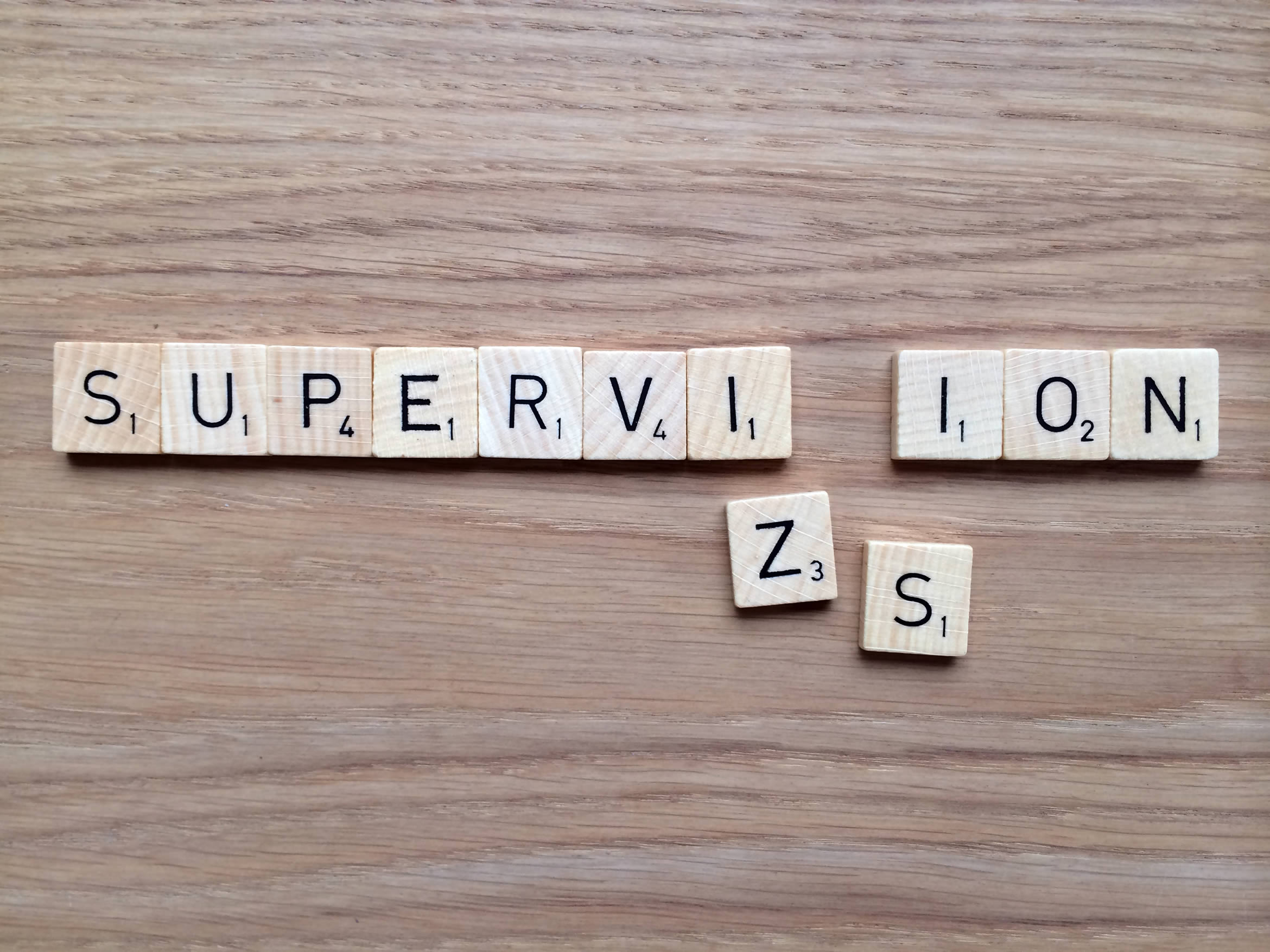
SUPERVIZION is a registered trademark.
This means that it cannot legally be used by anyone except the owner of the trademark and those who have an explicit permission from the owner. For this reason, it is also advised not to use supervision as a trademark.
Our corporate group is the owner of the SUPERVIZION trademark.
How to Spell Supervision? How to Spell Supervizion?
Are there different spellings of supervision? One of the most common misspellings in resumes/CVs is the word supervision. When applying for a job, you would like to present yourself in the best light and with correct grammar. How to spell it, then? If you are writing your CV, the correct spelling is most likely “supervision”. Write “supervision” to describe that you have been overseeing someone’s work.
Supervision vs. Supervizion
Only if you have worked at the business called SUPERVIZION, i.e. in one of the companies in our corporate group, would you possibly write Supervizion with a “z”.
In English language, the letter “z” is only used in the trademark name SUPERVIZION®. The common vocabulary word supervision is spelled with an “s” and not with a “z”, in both American English and British English (including British English with Oxford Spelling).
When deciding if a word should end with “–ise” or “-ize” (and its derivative forms “-ision” or “-izion”), the word’s origin is taken into account. As a general rule, the spelling of these types of words depends on if the word has roots from Greek –ιζειν or Latin –izāre. However, there are some words that are always spelled with “-ise” and “-ision”, the word “supervision” is one of those exceptions.
Is Supervision or Supervizion a Scrabble accepted word?
The 11 letters in the word supervision/supervizion makes it an attractive win if the word is accepted in Scrabble™ due to its high score. But, which spelling is allowed in Scrabble?
Scrabble Accepted Words
To score points when playing, the word needs to be an accepted Scrabble word. When competing in official tournaments of Scrabble, a pre-defined list of acceptable words is used that currently is “Collins Scrabble Words”. The same list is used worldwide (with the exception of USA, Canada and Thailand that use a different list). This official worldwide word list contains 267 751 words that are allowed in Scrabble (of which 27 893 permissible words are 11 letters long). In comparison, the Oxford English Dictionary contains about 301 100 main entries and with a total of about 616 500 word-forms.
Official Scrabble Spelling of Supervision/Supervizion
In both lists (the worldwide list and the USA, Canada and Thailand list), the word’s official Scrabble spelling gives the following:
→ “Supervision” can be used when playing Scrabble. → “Supervizion” should not be used when playing Scrabble.
Summary: Supervision vs Supervizion
The correct English spelling worldwide is “supervision”, for the regular vocabulary word. “Supervizion” is not the American spelling of “supervision”. SUPERVIZION is a registered trademark.
Supervision
– the act or function of overseeing something or somebody
SUPERVIZION
– a registered trademark
More about Supervision
Here is a deeper look at what supervision is and how the word is used.
What is the Definition of Supervision?
Supervision is the act or function of overseeing something or somebody. It might include advising, educating, monitoring, and supporting in relation to task output or task performance.
What is the Etymology of Supervision?
The word supervision stems from Latin’s “supervidere” (over/above + to watch/see).
Disambiguation of Supervision from a Heterograph
Supervision is different from Supervizion, also see above for more on this trademark.
What is the Meaning of Supervision?
Depending on the context, supervision involves carrying out different proportions of:
Monitoring of the supervised entity or individual, more often continuously rather than occasionally.
Educating the supervised, with the purpose to improving knowledge, skills, and attitudes.
Organizing the supervised and the environment around the supervised, with the purpose of improving the effectiveness and efficiency of resources used (materials/means), what is being done (process), or quality of results (output).
Motivating the supervised with the purpose of (re)establishing a good spirit and moral that improve the supervisee’s drive and satisfaction.
Enforcement of the supervised entity or individual’s compliance with law, rules, norms, ethics, and policies.
The supervision also takes place with different emphasis of the best interest for each of the stakeholders involved: a parent might act in the best interest of the child, but a manager might act in the best interest of the company rather than the supervised employee. Thus, the basis of influence and level of intervention also differs.
Supervision of staff
Supervision Explanation with Examples
In the academic world, a senior scientist might act as a supervisor towards a student, the person supervised, who is often a postgraduate student. They then have a supervisory interaction; involving moral support and scientific guidance. Such tutoring is common when the supervised student is writing an independent scientific work, which might be a thesis (to get a bachelor’s or master’s degree) or dissertation (for a PhD).
In the business world, both managers and supervisors perform supervision of subordinates or operations on a continuous basis within organizations. Here, a supervisor might lack the authority to hire or fire the person under supervision and might not be responsible for a budget (a manager is more likely to have those additional responsibilities too). Supervision is found taking place both of low-skilled staff and highly educated professionals. A special example of supervision is found in some countries where there is a required period of practical work experience after the formal education to advance in certain professions, e.g. to become a lawyer or physician. The “apprentice” is then under supervision of a more senior person in the profession for a few years of on-the-job training with oversight. In some professions supervision continuous during all work years, e.g. a psycho therapist might have therapist him-/herself to provide supervision and allow for reflection and perspective on the client work.
In society, whole organizations can be under supervision by governing bodies. E.g. banks are under supervision by international and national agencies. The health care system of a nation might be under supervision of an agency.
In family life, children are under the supervision of their parents or legal guardian. The watching over and care taking aspects of supervision is apparent in this context, as well as the purposes of attaining reasonable level of order and safety.
Supervision Management
As outlined above supervision is not the same as management. “Management” is a broader term than supervision. Management contains the activity of monitoring and directing subordinates (like supervision), but also doing other things for and with subordinates. Unlike supervision, management also involves activities towards or with other counterparts than subordinates. Management as a concept also means interfacing with for example superiors and peers (even if someone who do supervision might do to this too, the concept “supervision” as such does not include this). Everyone who does supervision, on the other hand, is not doing everything that management entails. In business, management often entails the authority to hire, promote, or fire a subordinate. But, supervision does not include such authorities.
Supervision management
Supervision Invigilation
“Invigilation” is an example of a more narrow term than supervision. Here, the supervised are narrowed to only students. The purpose is narrowed to ensure that exam rules are followed. Hence, invigilation is a specialized type of supervision.
Supervision invigilation
Supervision Oversight
Although not a perfect synonym, “oversight” has a meaning close to supervision. Oversight emphasizes the monitoring and rule following aspect of supervision, putting less emphasis on the coaching and motivational aspects.